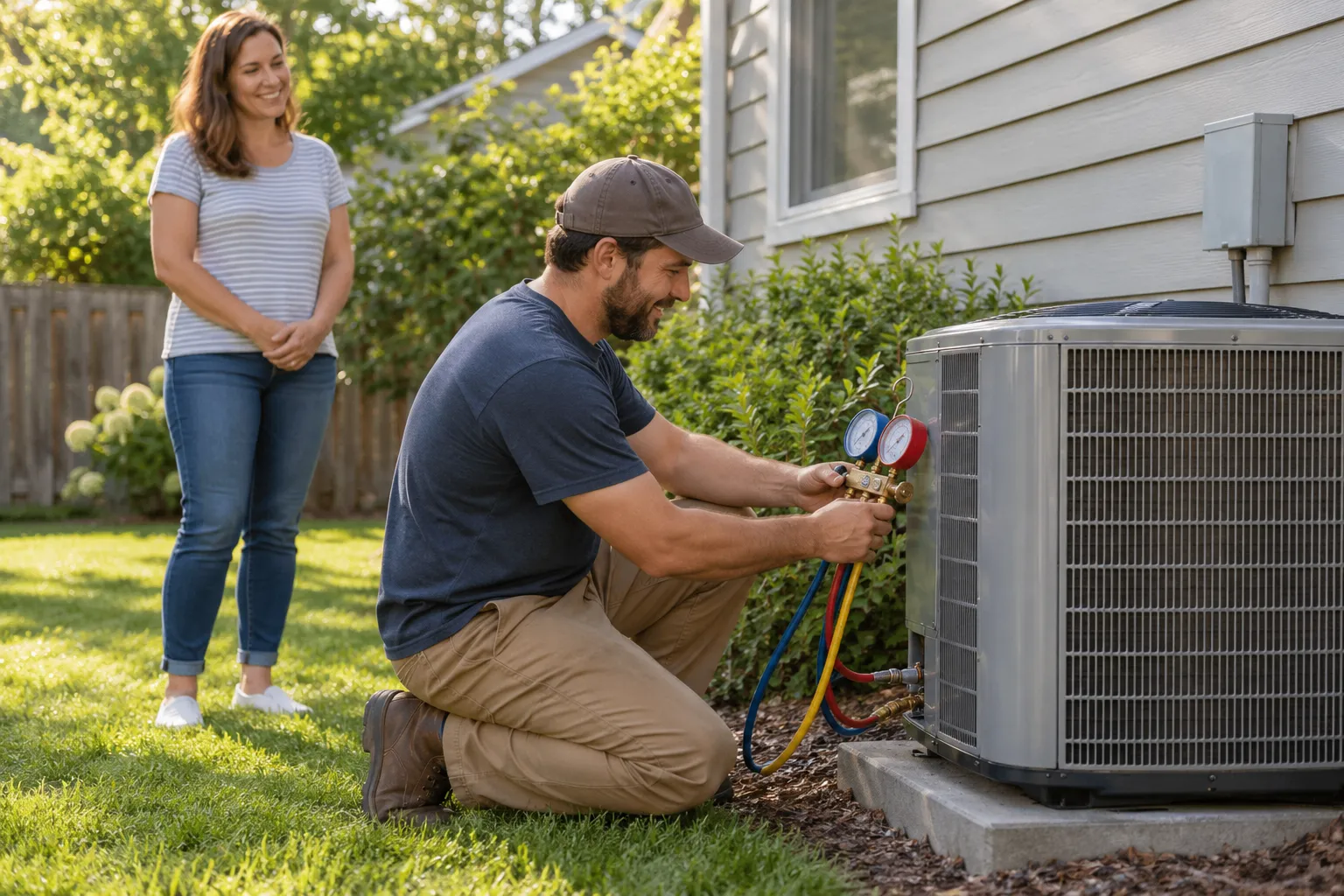
An air conditioner that blows warm air, trips a breaker or leaks water needs attention. Some problems are small. Others can damage the system or create a safety risk if you keep running it. This page explains what to check, what to leave alone, and what a repair visit usually involves.
Defendingloaded Heating & Air is a referral service. We do not repair air conditioners. We connect homeowners in St. Louis and across the St. Louis area with independent HVAC providers in our network. The provider does the work, sets the price and gives you the quote. Our job is to explain the process clearly, point you to safe first steps and help you avoid common mistakes. There is no obligation when you ask for an estimate.
AC Not Cooling? Start Here
A warm house in humid weather is uncomfortable. It can also be risky for young children, older adults and pets. Take a calm, short look at the basics before anything else.
Safe first steps
- Set the thermostat to cool and lower it a few degrees below room temperature.
- Check that the thermostat has power and fresh batteries, if it uses them.
- Look at your breaker panel for a tripped breaker, and reset it once only.
- Replace a clogged air filter. A dirty filter can choke airflow.
- Make sure vents and the outdoor unit are not blocked by furniture, leaves or debris.
What not to do
- Do not remove panels from the outdoor unit while it has power.
- Do not keep resetting a breaker that trips again.
- Do not spray water into the unit to cool it down.
- Do not try to add refrigerant yourself. It takes training and special tools.
- Do not keep running a system that smells like burning.
Turn It Off If You See These
Some signs mean you should switch the system off at the thermostat and the breaker. Burning or electrical smells, smoke, sparks, a loud grinding or screeching noise, and water pooling near electrical parts all qualify. Ice on the pipes or coil is another one. Running an iced-up system can harm the compressor, which is a very expensive part to replace.
What Emergency AC Repair Really Means
People search for emergency AC repair when the house is hot and they feel stuck. Providers set their own schedules and service hours. Some can respond quickly, and others book further out. Request a callback to check provider availability in your area. Nobody should promise a time before they know your situation, so be careful with anyone who does.
Signs Your AC Needs a Repair Visit
Not every problem is sudden. Many show up as small changes first.
- Air from the vents feels warm or only slightly cool.
- Some rooms cool well and others do not.
- The system runs longer than it used to, or switches on and off in short bursts.
- You hear rattling, buzzing, clicking or squealing.
- The house feels sticky even when the AC is running.
- Water drips near the indoor unit or the drain line.
- Your electric bill climbs without a change in habits.
Catching these early can keep a small repair from turning into a large one.
Who Does the Work and How Calls Are Routed
Here is how it works, plainly. Defendingloaded Heating & Air is a referral service, not an HVAC company, and it does not perform any repairs. When you reach out, Defendingloaded Heating & Air connects you with an independent provider in the network that serves your area. That provider talks with you, visits your home, and does the repair. The provider also sets the price and holds responsibility for the work. Ask them anything about licensing and insurance directly.
What Happens During a Repair Visit
Most visits follow a similar path.
Questions and a quick look
The provider asks what you have noticed and checks the thermostat, filter and breaker.
Testing the system
They measure airflow, electrical readings and refrigerant pressure. They inspect the coil, fan, drain line and outdoor unit.
Explaining the options
A good provider tells you what failed, what it will take to fix and what it costs. Ask for that in writing before work starts.
Common AC Repairs
A few parts cause a lot of breakdowns, especially in hot, humid summers when systems work hard for months.
- Capacitors and contactors: small electrical parts that help motors start. They wear out with heat.
- Fan motors: the outdoor or indoor fan may stop or run slowly.
- Refrigerant leaks: low refrigerant means weak cooling. A leak needs finding and fixing, not just a top-up.
- Clogged condensate drains: these can cause water leaks or shut the system down.
- Frozen evaporator coils: often tied to low airflow or low refrigerant.
- Compressor trouble: a serious and costly repair.
What Drives the Price
The part matters, but so does the labor, the age of the system, the refrigerant type and how hard the unit is to reach. Parts for older systems can be harder to find. See the cost table below for typical U.S. ranges. Your real price will vary by job.
Repair or Replace?
Repair usually makes sense when the system is fairly young and the fix is modest. Replacement deserves a look when the unit is old, repairs keep coming back or the compressor has failed. If the repair quote is a large share of the cost of a new system, ask the provider to explain both paths. The AC installation and replacement page covers that route in more detail.
Weather That Strains Your AC
Hot, humid summers keep systems running for long stretches. Severe thunderstorms bring power surges and hail that can dent coils and fins. After a storm, check the outdoor unit from a distance for damage and clear loose debris only when the power is off. Some home policies may cover sudden damage, so check your policy. Providers can often help document damage for a claim.
Questions to Ask the Provider
- Will you give me a written quote before starting work?
- Is the diagnostic fee separate, and is it applied to the repair?
- What exactly failed, and can you show me?
- Is the part new, and does it carry a warranty?
- Is there a labor warranty, and what does it cover?
- Would you repair or replace this system, and why?
Get the Quote in Writing
A quote in writing is the rule that protects you most. It should list the work, the parts, the labor and the total. If the number changes on site, ask why before you agree. A fair provider will not rush you.
What's Included
Cooling Diagnosis
A provider checks airflow, electrical parts and refrigerant to find why your system stopped cooling properly.
Part Replacement
Worn capacitors, contactors and motors are common fixes the provider can handle.
Leak and Drain Fixes
Providers can address refrigerant leaks and clogged condensate drains that cause weak cooling or water damage.
Written Repair Quote
You get the problem, parts, labor and total price on paper before you approve any work.
Typical AC Repair Costs
These are typical U.S. ranges. Your price depends on the part, labor, system age and access to the unit. Providers set their own prices, so always get a written quote before you approve work.
| Repair item | Typical range | Notes |
|---|---|---|
| Diagnostic visit | $75 – $200 | Often separate from repair cost |
| Capacitor replacement | $120 – $450 | Common after hot spells |
| Contactor replacement | $150 – $400 | Small electrical part |
| Condensate drain clearing | $100 – $350 | Prevents leaks and shutoffs |
| Fan motor replacement | $300 – $800 | Indoor or outdoor fan |
| Refrigerant leak repair and recharge | $200 – $1,500+ | Depends on leak location |
How It Works
Try Safe Steps
Check the thermostat, filter and breaker, and turn the system off if you notice burning smells or ice.
Reach a Provider
Request a callback to check provider availability, or use the request form.
Get Diagnosed
The provider inspects the system and explains what failed and your options.
Approve the Quote
Review the written quote, ask questions, then approve the work.
Why Call Defendingloaded Heating & Air
Clear Referral
Defendingloaded Heating & Air tells you plainly that it is a referral service, and that independent providers do all the work.
Safety First
Simple do and do-not guidance helps you avoid electrical risks and expensive mistakes.
Honest Pricing
We explain typical ranges and encourage a written quote so the price never surprises you.
No Obligation
Ask for an estimate, compare your options and decide on your own schedule.
Other Services
Need ac repair in St. Louis?
Have an AC or furnace problem? Send a request or call, and we will route you to an independent provider in our network. No obligation.
No obligationAC Repair FAQ
Why is my AC running but not blowing cold air?
Common causes include a dirty filter, a tripped breaker, a failed capacitor, an iced-up coil or low refrigerant. Check the filter and breaker safely, then ask a provider to diagnose the rest.
Is it safe to keep running an AC that smells like burning?
No. Turn it off at the thermostat and the breaker. Burning smells can point to electrical trouble. Leave the system off until a provider has inspected it.
How much does AC repair usually cost?
Many repairs fall between about $100 and $800, while compressor or major leak jobs can cost more. Prices vary by job, so ask the provider for a quote in writing.
Get in touch
Have an AC or furnace problem? Send a request or call, and we will route you to an independent provider in our network. No obligation.
No obligation